Nine hikers left Albemarle High School headed for Rockfish Gap on I-64. At times we appeared to be in a "Turkey Caravan" but later realized that we were intermingled with Hokie fans headed to Blacksburg for the VT game. We squeezed into the grass at Browns Gap parking since there were no spots left.
10/25/11
Lewis Peak - October 22, 2011
Anyone missing Saturday's hike to Lewis Peak missed the finest day in Shenandoah National Park in a while. The leaves were near peak and the temperatures were perfect on a cool and sunny day. Apparently this was obvious to many people as all the parking lots and overlooks were experiencing overflow conditions.
Nine hikers left Albemarle High School headed for Rockfish Gap on I-64. At times we appeared to be in a "Turkey Caravan" but later realized that we were intermingled with Hokie fans headed to Blacksburg for the VT game. We squeezed into the grass at Browns Gap parking since there were no spots left.
We headed up the AT and turned on to the Rockytop Trail leaving the crowds behind. We made the gradual climb to the junction with the Lewis Peak trail. Maynard and Leon stopped there so Bailey could rest and Maynard needed to turn back early to make an appointment. The rest of the group followed Lindsay on to the summit.
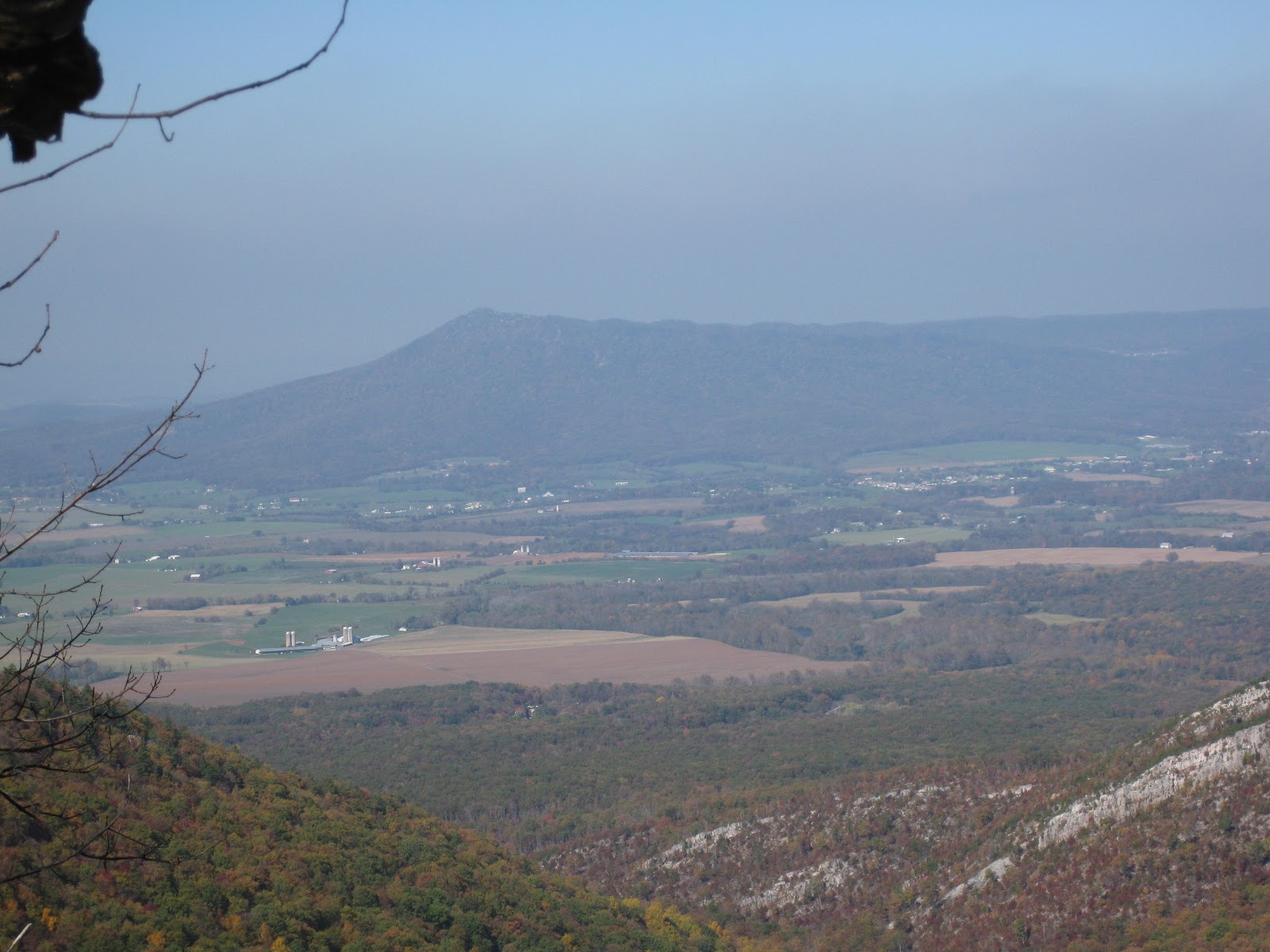
Don, Dan, Rita, Marian, Dave, and Sue all enjoyed the views from Lewis Peak toward Massanutten and northward toward Rockytop. After a lunch break we headed back down and picked up Leon and Bailey for the return to the parking lot. A great day to be out hiking!
Nine hikers left Albemarle High School headed for Rockfish Gap on I-64. At times we appeared to be in a "Turkey Caravan" but later realized that we were intermingled with Hokie fans headed to Blacksburg for the VT game. We squeezed into the grass at Browns Gap parking since there were no spots left.
10/13/11
Wildcat Ridge to Blackrock - October 1, 2011
Lindsay Brown met hikers amongst the chaos in the AHS parking lot on a weekend of SAT tests and band practice. The group persevered through the meet-up confusion and headed to the trailhead at Wildcat Ridge where hike leader Iva Gillet met the group, after a pre-hike 2 mile jaunt on the AT from Turk Gap with fellow hikers Maritza and Jack Hartnett, and Dan Ralston. While car shuttles were run, John Brandt appeared in his customary manner, ready to hike in shorts, despite the relatively cool temperatures. Also joining us this day were Joanne and Maynard Davis recently arriving from Switzerland . And as it is a small world, Lindsay and Maynard knew each other from their former lives 35 years ago!
After rolling along the AT for several miles, we decided to break for lunch at the Horsehead Mountain overlook which required a short walk along the Skyline Drive . We spread out on the grass at the overlook to soak up the expansive view that was the gift this day. All was well until a park ranger pulled over and approached the group. Acting in his usual presidential capacity, Lindsay Brown pointed out the hike leader as at fault for whatever the infraction was. However, the friendly ranger was only glad to see others enjoying the Park and the view, and he chatted for a while before moving on. I thought he was there to give John a warning about being shirtless, but such was not the case. No charges have been issued this time.
Soaking in the sun’s rays at lunch, Jeanne Bono and Dennis Templeton chatted with Bev and Pete Fink, making me realize we had 4 married couples on our hike this day. What an excellent way to spend a day with your spouse! More folks should try it! We packed up our repast and returned to the AT to finish the last 2 miles to Blackrock Gap. As this section of the trail is not part of any loop trails, it is rarely hiked except by AT hikers. With a few more ascents and descents, we arrived at Blackrock in plenty of time for the hike leader to jet off to the U.Va. football game. Jack kindly gave a ride to Pete, Bev, and John so that they could add a few more miles to the short hike this day, as they hiked back to the car from the other direction. Lovely fall weather as the leaves were starting to turn was a highlight, as well as a good time experiencing it with former and new friends.
By Iva Gillet
9/26/11
Sept. 24: Trayfoot Mountain, 25th anniversary hike
To commemorate the 25th anniversary of the Charlottesville Chapter, PATC, we repeated the first hike of the chapter—a circuit hike starting at Blackrock Gap. As fits a historic event in Charlottesville, the majority of those present were born in Virginia. And leader John Shannon, who was on that first hike, has lived longer in Virginia than anywhere else—even though born in Australia.
After completing the 10 miles, Dan Funkhauser asked about a post-hike beer, and we discussed a post-hike dinner, but complications from football traffic in Charlottesville and the lure of watching a game on TV helped nix the idea. We got back to town at 5 p.m.
![]() | |
| Going for gold, Larry Linebrink (top) and John Shannon did more (Larry) or less (John) Appalachian Trail maintenance, to continue their quests for Gold Service Awards from National Park Service. |
At Blackrock Gap, we were pleased to see Larry Linebrink, a member of the chapter from its founding days who was recently awarded a Silver Service Award from the National Park Service for 25 years of service to the Appalachian Trail. We talked about other people from the early days, some of whom are still in the area. Leon Gorman is the only person among the original members who has hiked with us in recent times. Then Larry left to help another trail overseer, starting work toward a Golden Service Award for 50 years service.
We started the hike in fog, and most of us were glad we wore long pants. Ken Moss and John carried saws because of a report earlier in the month of trees down near Blackrock. We did come across some small fallen trees, which we cut away from the trail.
At Blackrock, we did not climb the rocks because of the fog and instead headed toward Trayfoot Mountain. Along the way, we saw that exotic invasive plants have reached this area.
While we were heading down Trayfoot Mountain, the fog lifted. By the time we reached our west-facing lunch spot, we could see into Shenandoah Valley. John’s pumpkin cake was so good, that at least half of us ate two pieces of the delicacy, which led to conversation about Krispy Kreme and Spudnuts donuts. Soon after we started back on the trail, lunch expert Marian Styles pointed to a flat rocky overlook facing the main ridge of the mountains, a better spot for lunch than the one we’d chosen.
As we walked uphill along Paine Run, Don Davis carried out an abandoned foam pad. Closer to the top, Sue Tansey summed up the feeling that after looking at the site of the former Blackrock Hotel once, there was little to gain in looking at this area again, so we continued up.
![]() |
| Shenandoah Valley from Trayfoot Mtn on an overcast day |
![]() |
| Lunch on Trayfoot Mountain by Ken Moss |
How Charlottesville PATC started: In 1986, Rita Wyatt Beard moved to Charlottesville to start a chapter of PATC, in part as her way of recovering from being violent-crime victim. She sent invitation letters to PATC members in Charlottesville, and sat on the appointed evening in the Unitarian Church wondering if anyone would show up. Twenty or so people did, including Howard Parsons, who offered to lead a hike a week or two later. On Sept. 24, 2011, we repeated the route that Howard led 25 years before—the first hike of Charlottesville Chapter. Ten years after founding the Charlottesville Chapter, Rita Wyatt-Beard died relatively young from cancer after returning to Colorado. Nevertheless, the spirit of her policy of having a Chapter activity every Saturday has endured for 25 years.
9/19/11
September 17, Little Devil's Stairs
There once was a hike leader named Val
When she left PATC we cried “Foul!”
But rescue squading took her time,
And volunteering certainly is no crime,
Yet ’twas so nice to hike again with our pal.
How delightful it was to arrive at the high school parking lot and see former hiker/hike leader Valerie Lopez geared up to join us! We haven’t hiked with Val for 5 years, and her presence was today’s special treat.
John Shannon and Iva Gillet served as hike leaders, and in addition to Val, they were joined by Andy Willgruber, Dan Funkhauser, and yours truly (Marian Styles). Having two hike leaders would have allowed for two hikes—and today’s locale offered 6-, 8-, and 10.5-mile options—but because all six of us wanted to hike at least 8 miles, we hiked as one group.
![]() | |
| Little Devils Stairs |
![]() | |
| climbing Little Devils Stairs |
Maybe forecast rain had kept some people away, and we did hike through a light rain for the first half-hour. After that, though, we peeled off rain coats and enjoyed mostly overcast skies yet pleasant temperatures.
The Little Devil’s Stairs part of the hike combined beautiful natural features with an uphill workout. In fact, as Dan pointed out, this hike proved a good combination of ascents (about 2,500 feet throughout the day), descents, and level ground.
We were enjoying the hike so much that when the decision point came for 8 or 10 miles, we chose the 10+-mile version: all the better to fully enjoy the area’s spectacular geology and peaceful forest. Plus, agreeing to the distance gave Andy (and others) an excuse to blame Iva should the length prove a bit much.
![]() | |
| interesting tree on Piney Branch Trail |
![]() | |
| Dwyer cemetery on Piney Ridge Trail |
We saw few other people during our route. One place that did have people was the Range View cabin, where we were hoping to have a dry place to sit for lunch. Since the cabin was occupied, we walked a bit further and pulled out ponchos and plastic bags to sit on during lunch. Having to sit on the ground was mitigated by the yummy pumpkin bread that John passed around.
Reinvigorated, we hit the trail. The route had been decorated by an abundance of colorful mushrooms, including a bouquet of amazing yellow-orange mushrooms growing up in a tree beside the Bolen Cemetery.
Speaking of cemeteries, this hike featured two. Several of the dates on grave markers in the Bolen cemetery showed that the influenza pandemic of 1918-19 had probably cut short the lives of some who lived here before the park was created.
![]() | ||
| tall trees on Form Mountain Trail |
![]() | |
| Bolen cemetery, Hull School Trail |
Back at the cars, Iva didn’t get any guff for having lobbied for the full distance. In fact, we all agreed that it had been a fabulous hike, and we decided to extend the fun by stopping for dinner on the way home. We ended up at Pig and Steak in Madison, where in addition to B-B-Q, sweet potato fries, hush puppies, and fried mushrooms, we also pigged out on fried broccoli that Val had ordered in honor of the absent Leon Gorman.
Meanwhile at Dunlodge, Don Davis, Thomas and Mary Jorgensen rebuilt some steps to the cabin, while Tom Johnson repaired some trail on the property.
September 10-11, AT relocation at Beagle Gap
The long-awaited relocation of the Appalachian Trail from Beagle Gap up Little Calf Mountain broke ground today. Crew leader Don White arranged for excellent weather, warm, but not hot, and no rain.
The first clearing work was on Sept. 3, when Andy Willgruber and Don Davis mowed Little Calf Mountain summit and some areas north and south of the summit that will become trail. On Saturday, trail builders met at Beagle Gap around 9 a.m. to collect tools, hard hats and directions.
![]() |
| Making new trail with a McLeod |
The most-used tools were pulaskis and McLeods to cut out a near-level trail in the side of the hill. We used a couple of rock bars to move some large rocks. A sledge hammer to knock off pieces of rock would have been helpful, but perhaps not worth the effort of carrying. Later I discovered there is a product named “light-weight sledge hammer,” not available at the usual home improvement store or even amazon.com, but perhaps we will find them at the Shops at Stonefield when they open. For $60/pound, you can reduce the weight of a sledge hammer by 1.5 pounds.
Other useful hand tools included loppers for a little clipping and leaf bags. The first rule of the day was that no one was going home in a body bag, so in addition to what people often wear for trail work, hard hats were required. One person said it was the first time she had to wear one, and thought it a good idea.
The workers came from near and afar. One trail maintainer from Missouri was in the area and spent part of the day helping. He invited others to join him at Springer Mountain next February, or to see him in May when he passes through this area on the Appalachian Trail. A number of people were from northern Virginia and Maryland, and seven were from the Charlottesville area.
![]() |
| Crew leader Don White |
Andy used the field mower to cut a wide strip through the grass near Beagle Gap. Don was the chainsaw operator, cutting some large, dead trees in the way and other small trees obstructing the trail. Excitement ensued when a large log rolled down hill but was stopped by a tree. Mostly people dug into the side of the hill to make a trail bench. This is a fairly different world from repairing existing trail, requiring deeper digging and cutting more roots. In spots, we had to remove many rocks, some large, many small.
One observation was that crew leader Don White took the long view by building the best trail he can--one that avoids steep inclines and is free of rocks that might trip people--because people will use it for decades, so at times there was a lot of work on small sections. For instance, there was the rock sticking up an inch above ground where it could trip people, but took a lot of digging to move the foot of rock below the surface. A couple of times there was a choice of an easier-to-walk path for the next 15 feet, or an easier-to-build route; the choice was the easier-to-walk and less erosion-prone route. The benefits of less erosion and less uphill will last for decades, after the extra time and effort for construction are forgotten.
One person asked why we did not use an existing abandoned trail, or perhaps road, instead of digging new trail. The main reason is that the existing path stays level, and then requires a relatively steep uphill, unlike the new trail which gently climbs along the face of the hill.
As on other trips, some people made beautiful wide, flat trail, while others dug trail that was more wilderness-like. A sign that the area is meant to be trail is that some exotic invasive plants are already growing, although they have not yet taken over the area.
![]() |
| Lunch with chia and chocolate |
At lunch on Saturday, we heard of the health benefits of chia. The advocate is 82, has walked 500 miles this year, and plans more next year, and told of us several problems that improved after eating chia. Bill Holman distributed dark chocolate treats, and I passed out chocolate (contains flavenoids to neutralize free radicals) babka with a mix of dried fruit.
Toward the end of the day, the last task on the trail was scattering leaves over the bare earth to reduce splash erosion. When back at the vehicles, it was time to clean tools, a new experience for some, and cool drinks from crew leader Mark Gatewood. Some people headed home (a few returned Sunday) and half the crew went to spend the night at Schairer Trail Center with dinner by Mary and Thomas Jorgensen, known to some from work on Dunlodge Cabin.
![]() |
| Covering new trail with leaves to reduce erosion |
On Sunday, there was some crew turnover, with some people from Blue Ridge and Bridgewater Colleges. Although there were four Ph.D.s, we accomplished some trail building. Some of the new crew showed that trail workers can be under 40, even under 30. Don Davis spent much of his time using a brush cutter to reduce the effort of clearing shrubs from the trail further uphill, where there is less of the time-consuming side hill trail construction.
Working with a trail crew comes with benefits. One is getting a free T-shirt. Another is the social contacts and sometimes free access to people who know useful things. We have Don Davis who knows how to repair most things used by trail maintainers and house owners. Sunday’s learn-something-new-every-day came from talking to a teacher of arborists, who explained that some tree care practices ignore the trees’ hundreds of millions of years experience in survival.
Perhaps the biggest benefit of trail work, though, is seeing how people will spend hours getting dirty, tired and sore to preserve one of America’s treasures.
Subscribe to:
Posts (Atom)